
Chef’s knife
- In stock
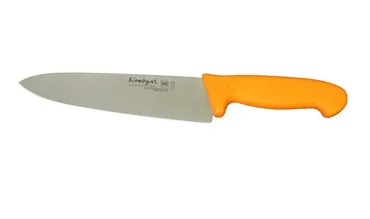
Chef Knife Simogas
- Material
- Stainless steel and polypropylene
Accessory size
You have selected an option that is unavailable for this product.
€19.90Tax included
You save
---Tax included
Simogas Black Friday: up to 50% off — Your last chance to get equipped at the best price. Until 30 November.

Are you looking for professional kitchen knives? Discover our full range of products, so you can cut the food you are going to cook on your gas plancha or your electric plancha like a real chef.
Accessory size
You have selected an option that is unavailable for this product.
Accessory size
You have selected an option that is unavailable for this product.
You have selected an option that is unavailable for this product.
Accessory size
You have selected an option that is unavailable for this product.
Accessory size
You have selected an option that is unavailable for this product.
Accessory size
You have selected an option that is unavailable for this product.
Accessory size
You have selected an option that is unavailable for this product.
Accessory size
You have selected an option that is unavailable for this product.
No models match your filters.
Start by choosing a sharpening tool. You can use a whetstone, a whetgun or an electric sharpener.
Hold the chef's knife at a 20-degree angle against the sharpening tool.
Run the blade along the tool, starting at the base of the blade and moving towards the tip.
Repeat on the other side of the blade.
Check the cutting edge of the knife by cutting a piece of paper or a tomato.
There are different sets of kitchen knives, but the following are available on our website :
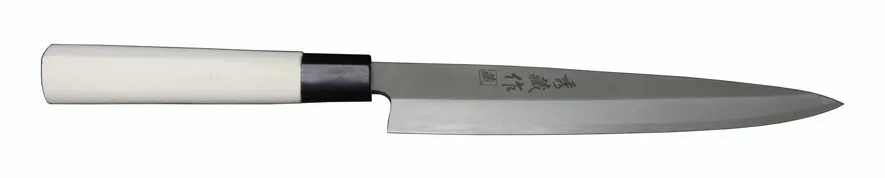
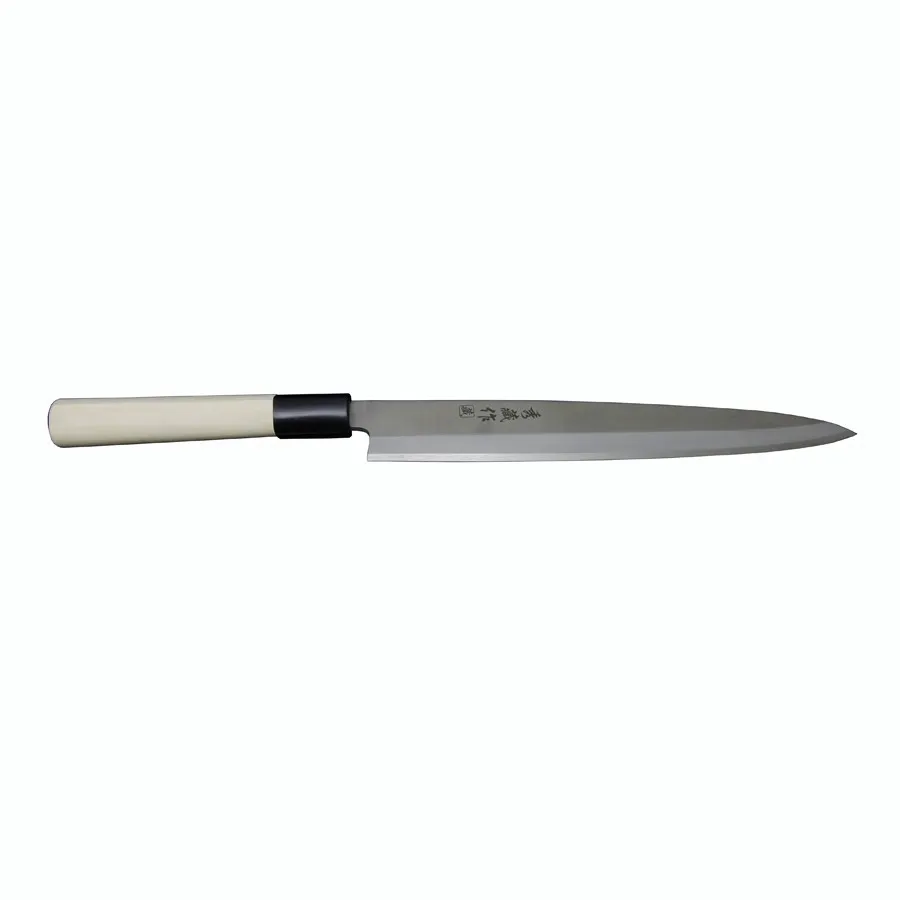
Sashimi knife: This Japanese knife is used to slice raw fish into thin slices. It has a long, thin blade with an extremely sharp edge. The blade is usually made of stainless steel or carbon steel.
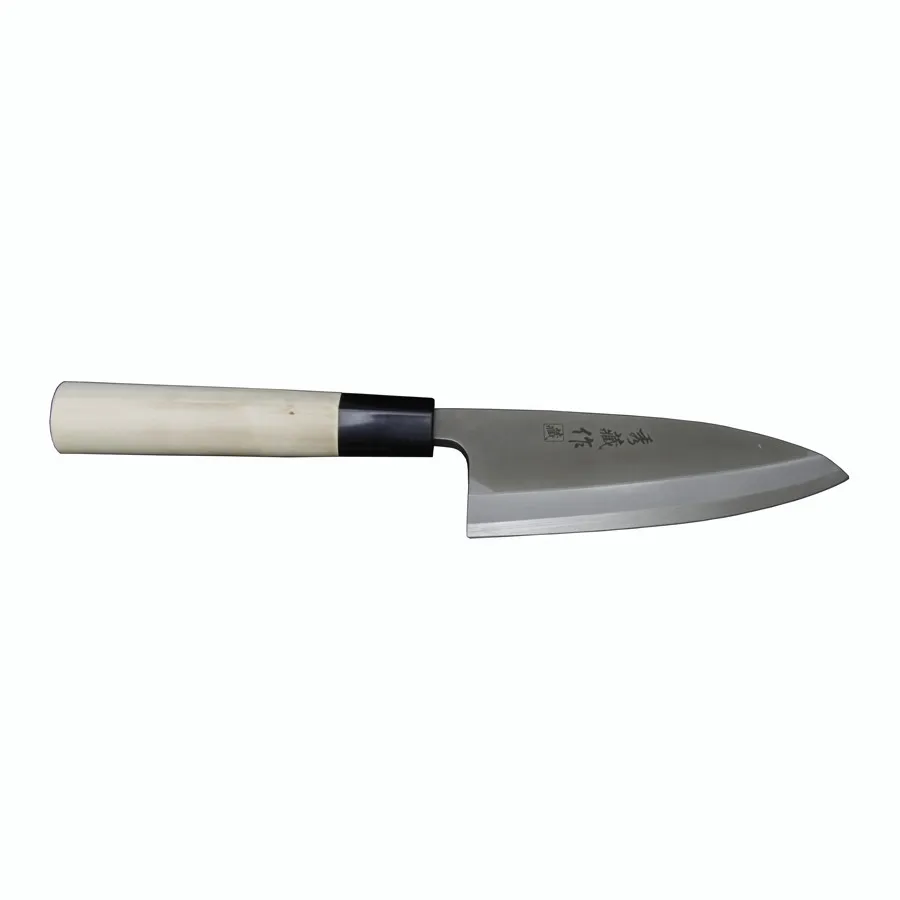
Deba knife: This knife is used to cut and debone fish. It has a thick and sturdy blade that can easily cut through the bones and skin of the fish. The handle is often made of hardwood for a comfortable grip.
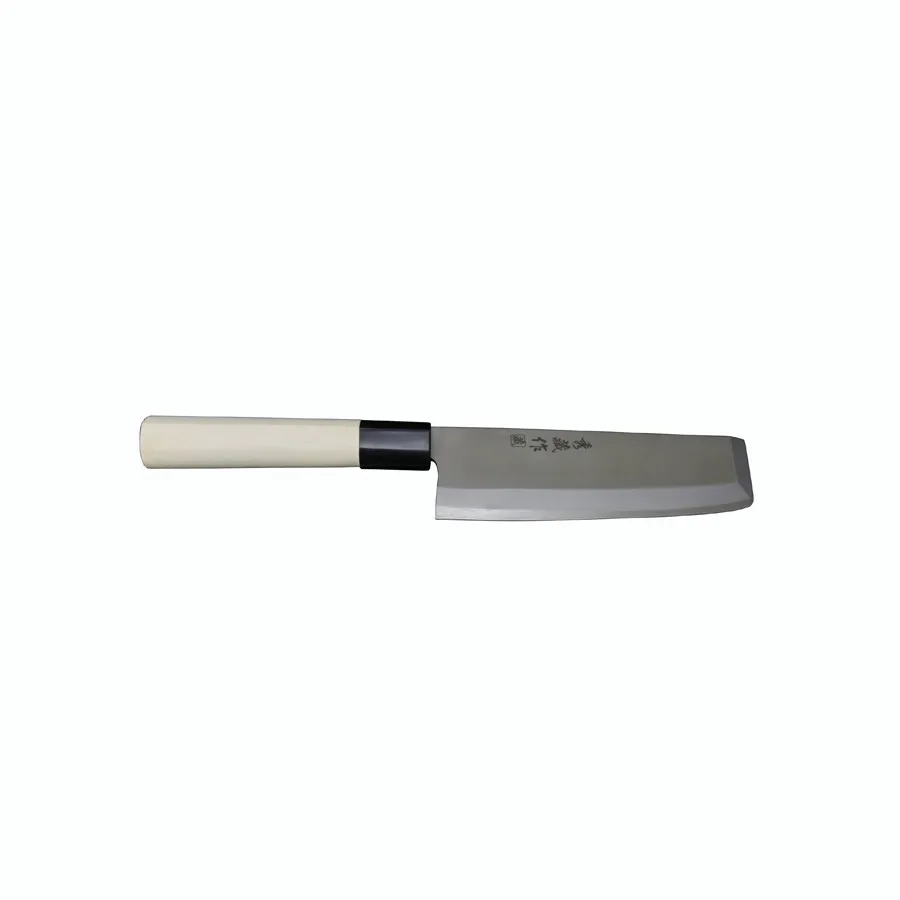
Nakiri knife: This knife is used to cut vegetables. It has a rectangular and flat blade that facilitates julienne or diced cutting. The handle is often made of magnolia wood for a comfortable grip.
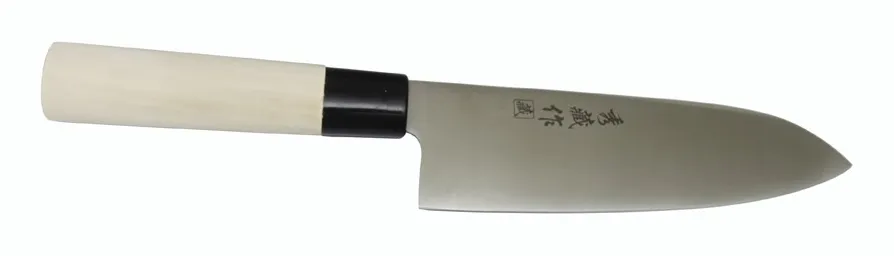
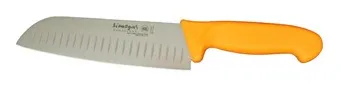
Santoku knife: This versatile knife is used to chop, slice and cut meats, vegetables and fruits. It has a short and wide blade with a slightly curved edge. The handle is often made of hardwood or resin for a comfortable grip.
There is no single answer to the question of what are the best kitchen knives, as it depends on the personal preferences of each chef or amateur cook. It is important to choose a quality chef's knife with a sharp blade and comfortable to hold. Stainless steel kitchen knife kits are popular for their durability and ease of maintenance, but carbon steel knives are often preferred for their ability to maintain a cutting edge longer. It's also important to choose a kitchen knife purchase that suits your cutting style and kitchen needs.
For proper maintenance kitchen knife block, which guarantees their durability over time, we advise you to follow these tips:
Wash and dry the kitchen knives set after each use.
Store them in a block or on a magnetic tape to avoid damaging the blade.
Sharpen knives regularly with a sharpening gun so that they remain sharp.
Avoid using the kitchen knife box on hard surfaces, such as ceramic or glass cutting boards, as this may blunt the blade.
Sharpen the assortment of kitchen knives using a whetstone or electric sharpener when blunt.
The best steel for a kitchen knife is subjective and depends on personal preference. However, the most commonly used type of steel for kitchen knives is stainless steel.
When choosing a kitchen knife, it is important to consider the following characteristics:
Think about the type of knife you need for your cooking tasks.
Look for a knife whose handle is comfortable and suitable for your grip.
Consider the weight and balance of the knife.
Choose a solid silk knife, which means the blade goes through the handle for better balance and durability.
Look for high-quality steel that is durable and able to retain its sharpness.
Use a sharpining steel for a kitchen knife:
Choose the right sharper for your knife.
Put the sharper on and hold the knife against the strip at the desired angle.
Move the knife along the strip, starting at the base of the blade and moving towards the tip.
Repeat on the other side of the blade.
Check the cutting edge of the knife by cutting a piece of paper or a tomato.
Rinse the chef's knife with warm water immediately after use.
Use mild soap to clean the blade, handle and all other parts of the knife.
Use a sponge or cloth to gently scrub and remove food particles or stains.
Rinse the knife again with warm water to remove any soap residue.
Dry the knife with a clean towel or cloth.
Blade shape: A chef's knife has a curved blade, while a Santoku knife has a straighter and flatter blade.
Blade length: The blade length of a typical chef's knife is 20 to 25 centimeters, while that of a Santoku knife is usually shorter, on the order of 12 to 18 centimeters.
Blade thickness: The blade of a chef's knife is thicker than that of a Santoku knife.
Handle: The chef's knife usually has a longer handle, while the Santoku knife has a shorter, more ergonomic handle.
Cutting style: A chef's knife is great for chopping back and forth, while a Santoku knife is designed for chopping and slicing from top to bottom.
Grasp the handle of the knife with the dominant hand and put the other hand on the food to be cut.
Perform a back and forth motion to cut with a chef's knife or a straight up and down movement with a Santoku knife
Perform a slicing motion to cut larger foods, such as meat or bread.
Keep your fingers folded under the blade and away from it to avoid injury.
Make sure the blade is sharp to make cutting easier and safer.